
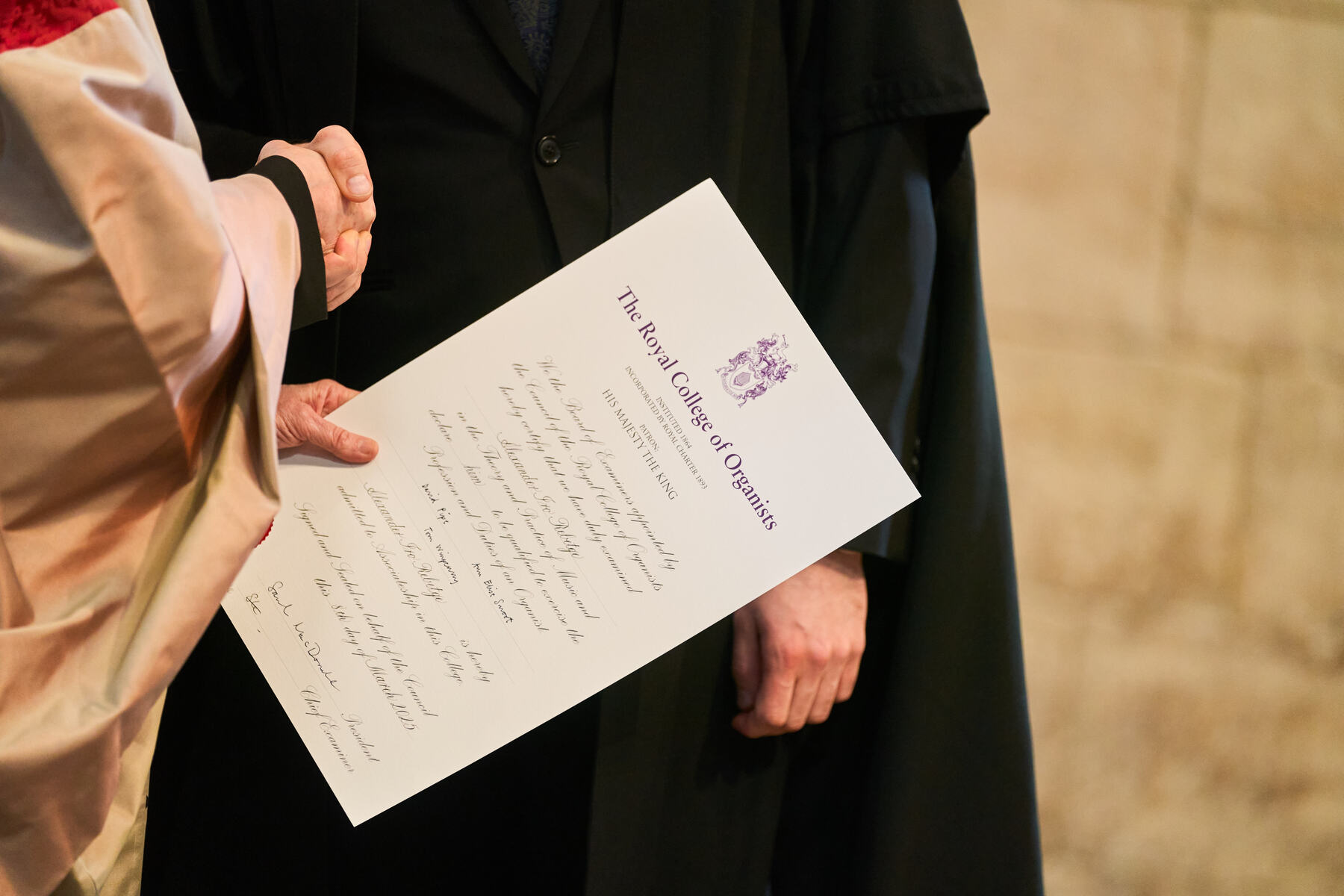
The Fellowship Diploma of the Royal College of Organists represents the highest level of organ accreditation, recognising advanced technical command, stylistically informed interpretation and authoritative musical understanding.
It is intended for experienced and highly developed musicians who wish to demonstrate authority, insight and distinction at the organ and in related stylistic, contextual and historical studies.
For successful candidates, FRCO marks the culmination of a sustained period of musical development and achievement within the RCO framework.
The Fellowship indicates a standard of advanced and authoritative musicianship in organ playing, together with highly developed technical command, stylistic awareness and musical understanding.
Candidates demonstrate:
FRCO reflects a level of musicianship that combines technical mastery with interpretative authority, intellectual rigour and artistic individuality.
FRCO is suitable for musicians who have reached an advanced stage in their development and are ready to demonstrate the highest level of achievement within the RCO diploma framework.
Typical candidates include:
FRCO builds on the foundations established at ARCO and reflects a further stage of musical development, refinement and critical depth.
“Preparing for FRCO was intense but extremely rewarding… [it] enabled me to grow both as a musician and as a person, and it deepened my appreciation of the British organ tradition.”— Stéphane Mottoul (Belgium)
FRCO assessment reflects a comprehensive and integrated approach to advanced musicianship, combining performance, keyboard skills and written disciplines.
Assessment includes:
The examination is divided into two sections:
The recital requires candidates to present a balanced and contrasting programme, demonstrating stylistic awareness, control and musical judgement.
Each section may be entered separately, and section passes remain valid for a period of four years.
The Keyboard Skills Portfolio is completed through audio-visual submission only.
The Written Papers are completed through digitised submission only.
The organ performance part of the Practical Examination is completed in person at an examination centre. Where an exception has been applied for and granted in advance, this part may be completed through audio-visual submission.
All aspects of assessment can therefore be completed remotely if required, making the FRCO fully suitable for international candidates.
Full details of the examination structure and requirements are provided in the published regulations available at the bottom of this page.
Preparation for FRCO typically involves sustained and independent study, supported by specialist guidance and resources.
Candidates may prepare through:
Details of these resources are available on the Candidate Hub page.
To enter the Fellowship of the Royal College of Organists (FRCO) examination you must:
FRCO is the only RCO diploma with a formal progression requirement. Candidates must complete ARCO before entering for Fellowship.
Application deadlines are published in advance and should be checked carefully before entering.
Organ diploma examinations are held twice each year:
The latest deadlines and examination dates can be found on Key Dates & Fees >>
Fees for the whole examination, or entry and re-entry to individual components, are available on Key Dates & Fees >>
Applications are submitted online and can be completed in a few minutes.
1. Join the RCO
You must be a member before entering.
2. Sign in to the Member Area
Access the diploma entry system.
3. Complete the entry form
Select your examination session and pay the examination fee.
You will then receive confirmation and further information about the examination process.
Candidates should review the key documentation for the Fellowship of the Royal College of Organists (FRCO) examination.
These documents provide essential information about: examination structure; recital and performance requirements; written and aural components; marking criteria; and submission guidance.
If you have questions about entry requirements, examination structure, or the suitability of FRCO for your current level, please contact the RCO Accreditation team:
We recommend reviewing the published regulations before contacting the team, as many common questions are answered there.